

BS5837 Tree Survey: what is the practical point?
BS5837 tree survey should make the next decision easier. Good arboricultural work is not about making every tree sound dangerous or every design impossible. It is about identifying the material issues, explaining them clearly and giving the project team a workable route forward. The starting point is the reason the information has been requested, because that determines what the inspection and written advice need to cover.
Tree data, categories, crown spreads and Root Protection Areas for planning and design. In Tandridge and the surrounding districts, sites range from compact suburban gardens to wooded village plots and larger rural-edge properties. That variation is exactly why a proportionate scope matters.
For BS5837 tree survey, send the address, relevant wording and current documents. Do not commission a wider report just because the terminology sounds technical.
What should BS5837 tree survey include?
The exact contents depend on the reason for the instruction, but a useful BS5837 tree survey should define the trees or issues that are material, explain the evidence gathered and keep recommendations within the arboriculturist’s professional remit. Where drawings or professional instructions change, tree information may need to be checked again. A report tied to an old scheme can create confusion even if the original survey work was perfectly sound.
Planning, drawings and BS5837 coordination
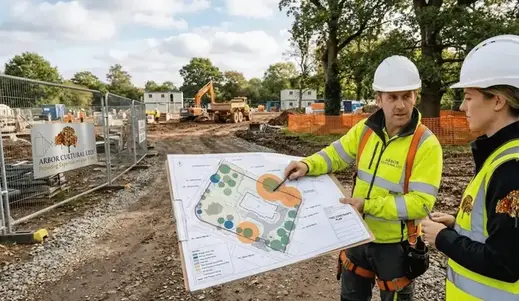
If the subject relates to planning, keep the latest architectural layout available. Tree positions, crown spreads, Root Protection Areas, removals, access, drainage, levels and construction space can all change the answer. A BS5837 tree survey that responds to the current revision is more useful than a polished report describing a superseded scheme.
Where does BS5837 tree survey sit in the planning sequence?
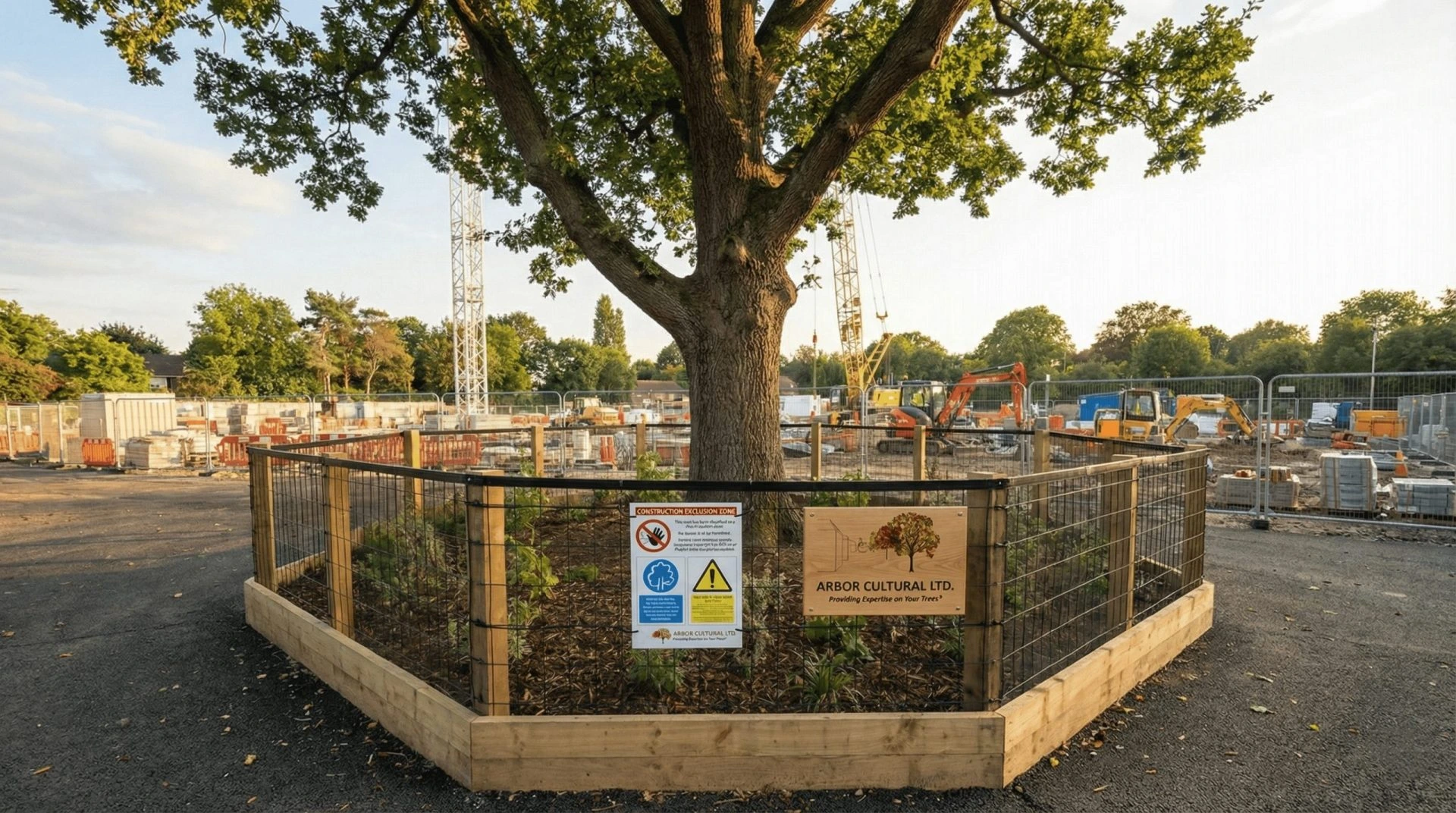
BS5837 work may begin with a tree survey and constraints information, then move into an Arboricultural Impact Assessment, Tree Protection Plan, Arboricultural Method Statement and, where conditioned, site supervision. Not every site needs every document. The sensible sequence is the one that matches the application stage.
What happens after BS5837 tree survey is commissioned?
Once the scope is agreed, the consultant reviews the supplied information, carries out the inspection or technical review required and prepares the agreed output. The final BS5837 tree survey should be clear enough to forward to the planning team, lender, insurer, surveyor, solicitor or other professional who asked for it.
What should you send before we review BS5837 tree survey?
Before an instruction is confirmed, it helps to gather the documents that caused the question in the first place. For planning work that may be the current site plan, proposed layout and council wording. For property work it may be a valuation extract, building survey, insurer email or photographs. Sending the source material at the beginning keeps the arboricultural advice tied to the real decision rather than assumptions.
- The full site or property address and postcode.
- The exact council, lender, insurer or surveyor wording that triggered the request.
- Any current plans, valuations, photographs or existing tree information that are relevant.
- Your practical deadline, especially where validation, exchange, completion or site works are approaching.
What makes BS5837 tree survey genuinely useful?
The value of a report is not its page count. It is whether the document answers the question, uses the current information and gives the next professional in the chain something they can rely on. Clear photographs, plans, schedules and recommendations are useful when they support that purpose; extra material that does not change the decision simply creates noise.
A strong BS5837 tree survey should therefore be proportionate, evidence-led and written for the person who needs to act on it. That may be a homeowner deciding what to do next, an architect coordinating a design, a planning officer reviewing a submission, or a lender or insurer closing out a professional requirement.
What if the information changes?
If the request changes after the first inspection, that does not automatically mean starting again. Often the existing survey evidence can still be used and the written advice can be updated around the new question. The important point is to flag the change early so the final document is describing the live situation.
Related advice and next steps
If your question overlaps with another report type, use the related pages rather than trying to make one document do several unrelated jobs.
For the wider technical consultancy behind this service, see Arbor Cultural's corresponding arboricultural service. This is a contextual technical reference rather than a repeated sitewide keyword link.
- BS5837 tree reports
- Arboricultural Impact Assessment
- Arboricultural Method Statement
- Tree Protection Plan
You do not need to arrive with a technical brief. A short email containing the address and the exact wording you received is often enough to establish the sensible next step. If you are still unsure, send the wording rather than guessing. That usually produces a faster and cleaner scope.